Showing posts with label hair lingo. Show all posts

Water Washing

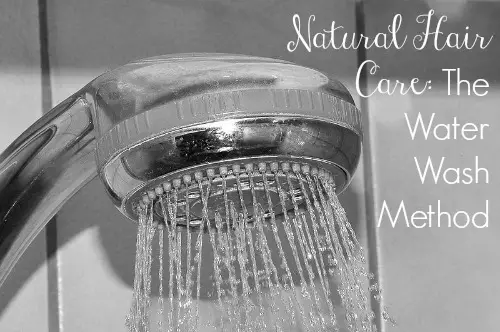
While scrolling about a few weeks ago on some natural hair care blogs, I saw a comment that gave me pause - Water Washing. Huh? What is water washing? Isn't that just rinsing? :p

Well, I decided to do a quick search on the concept of Water Washing and why anyone would or should do it. There's actually a website fully dedicated to it - Water Only Hair Washing. Yes, WOHW is an acronym, one that I had never seen before (Can there be a hair care dictionary already?)
Source
The basic premise of Water Washing is to allow your scalp to produce sebum for protecting and moisturizing your scalp and hair strands. The method is start off with a clarifying shampoo, and then follow a regimen of rinsing and massaging your hair daily for a few weeks or so. The daily massaging and light scratching of the scalp is supposed to loosen up the sebum on your scalp, and you can distribute the natural oils from there onto your hair strands with your fingers.

There is allowance for clarifying the hair every other month (or even longer), but it's suggested that you use only natural shampoos.

The main thing that gives me interest in this method of natural hair care is that you don't need any products at all! So it's definitely pocket-friendly. You still of course need to detangle your hair often (weekly I think).

The lady who started this method says she has been doing it for over a year and is very happy with her results.
WOHW Instagram
I saw some others here, here and here who tried the method with varying results. Do I think I can try it? Maybe. Do you think you would?

Berry Dakara.

What is Hygral Fatigue?

You know sometimes, I feel like such a newbie when it comes to [natural] hair terminology and different methods of hair care. I can hardly tell you the difference between the Curly Girl Method and the Maximum Hydration Method and the Ooh-La-La-I'm-Making-This-Up Method :p

Anyways, sometime ago, I was going over my blog reading list and I noticed in someone's comment, she complained about hygral fatigue. I went "huh?" And so off I went to find out more about it.

hygral fatigue, african naturalistas, natural hair

The definition of Hygral Fatigue is: when the hair shaft swells excessively in the presence of water, and contracts during the drying process. The hair shaft undergoes constant expansion and contraction, which causes the cuticle to lift. This in turn changes the uniformity of the hair shaft and can lead to splits. Some of the causes include using only moisturizing conditioners without protein, constantly doing overnight DCs or leaving them on for too long... some sites I read even said washing your hair everyday can lead to hygral fatigue.
african naturalistas, natural hair tips, team natural, hygral fatigue, natural hair care, natural hair regimen
Source

african naturalistas, natural hair tips, team natural, hygral fatigue, natural hair care, natural hair regimen
Source
How do you know if you have it? A possible sign is when you stretch a strand of hair and it doesn't snap back into place... basically, low elasticity. You can also check for signs of splits in the middle of your hair shaft. 

How to prevent Hygral Fatigue
Ensure that you balance your moisture treatments with protein treatments. Additionally, prepooing with oils like coconut or olive, helps to prevent your hair from swelling too much when wet. You can also do more air drying after washing your hair, as using drying tools can cause your hair to dry too quickly, causing fast contraction of your hair shaft. 

I don't know all the answers obviously, but if you're wondering, you can always check out the African Naturalistas Hair Clinic for answers to this and other hair issues.

Have a great weekend,
Berry Dakara.

Hair Profiles: Type 4

Hello Naturalistas, 

We are going to continue with the Hair types based on Andre Walker hair typing system because I think it's alot more simplified that the others and straight to the point.  

Let's talk about Type 4 hair.


Type 4 hair can range from fine and thin to wiry and coarse with lots and lots of strands densely packed together. Type 4 hair is full of tight coils (tightly curled hair). It has fewer cuticle layers than other hair types which means it has less protection from damage inflicted by combing, curling, blow-drying and straightening. 
Sub-types: 
Type 4A: Type 4a is tightly coiled hair that has an "S" pattern. It has more moisture than 4b; it has a definite curl pattern. The circumference of the spirals is close to that of a crochet needle. The hair can be wiry or fine-textured.  
Type 4B: Type 4b has a "Z" pattern, less of a defined curl pattern. Instead of curling or coiling, the hair bends in sharp angles like the letter "Z". Type 4 hair has a cotton-like feel. The hair is very wiry, very tightly coiled or bent and very, very fragile; you must take great care when working with it. Type 4 hair can range from fine/thin to wiry/coarse with lots and lots of strands densely packed together. Type 4b hair often shrinks up to 75% of the actual hair length.


Type 4C: Type 4c hair is composed of curl patterns that will almost never clump without doing a specific hair style. It can range from fine/thin/super soft to wiry/coarse with lots of densely packed strands. 4c hair has been described as a more "challenging" version of 4b hair. Some say 4c looks identical to 4b except that the curls are so tightly kinked, there is seemingly no definition. 4c hair can shrink more than 75%.

Hair care tips: 


*Culled from the internet 

5 Things you should not say to a Naturalista, in GIF

Hello Naturalistas,

How has your week been? and the kinks?

Now, because Beautiful Eagle decided to bully me ask nicely, I will quickly share the not-so-eventful way I got Uti to do the mane matter.

I know a photographer and he mentioned in passing that he was having a shoot with Uti and I jumped with glee, my first question was ¨Can you ask him some hair questions for me?¨ and he buzzes me on the day of the shoot to send my questions but I asked if I could do it myself and he obliged, asked Uti and he agreed and the rest is History ;)

***
I am sure that every naturalista is familiar with this, Here are 5 things that I have heard and I think should not be said to an african naturalista;

¨Did you cut your hair?'' 


For the umpteenth time: NO! It shrinks -__- 

¨How do you comb your hair like that?''


With a comb duhhh...

¨Are you going out like that?¨


Watch me *does the moon walk out of the door*

¨Can I touch your hair?¨


I meant it yesterday. NO!

¨You should go make your hair''

Oh No! you didn't!! 
Its made!

''You won't get a boyfriend, looking like that''

I have a boyfriend. 

Opps! I said 5, I couldn't help it. 

Is anyone with me? Please tell what else you think should not be said to ladies with natural hair. 

The ABC of Natural Hair


Hi ladies!

Happy New Year!!!!
As my first post of the year, I bring to you the ABC of natural hair. There are a lot of abbreviations/acronyms that are often used on hair blogs, AN inclusive. As a new natural, they can be really puzzling at times but today we're gonna be decoding them.

A for APL (Arm Pit Length)
A for ACV(Apple Cider Vinegar)


B for BC (Big Chop)
B for BSL (Bra Strap Length)

C for Co-washing
C for CL(Collar length)
C for 'cones (silicones)


D for DT/DC (Deep Treatment/Deep Conditioning)

E for EVOO (Extra Virgin Olive Oil)
E is also for EVCO ( Extra Virgin Coconut Oil)
E for EO (Essential oil)


H for HIH (Hand in Hair)/ HIF (Hand in Fro) syndrome
H for HHJ ( Happy Hair Journey)


L for Low Manipulation
L is also for LTT (Long Term Transition)

M for MBL (Mid Back Length)

N for No-Poo or No Shampoo

O for Organic

P for PJ (Product Junkism/Junkie)
P is also for Pre-poo

S for SLS (Sodium Laureth Sulfate)
S is also for SSNs (Single Strand Knots) also known as Fairy Knots


T for TWA (Teeny Weeny Afro)

W for WNG(Wash N Go)
W for WL (Waist Length)


Z for Z Pattern


Any other one I've skipped? Please use the comment box


Alright then.
Stay Beautiful
@eBunite
Related Posts Plugin for WordPress, Blogger...